
- Share
- Tweet
- Pin
- You are here:
- Home »
- Blog »
- Art History »
- Gothic Art History
Gothic Art: Transforming Stone into Heavenly Light
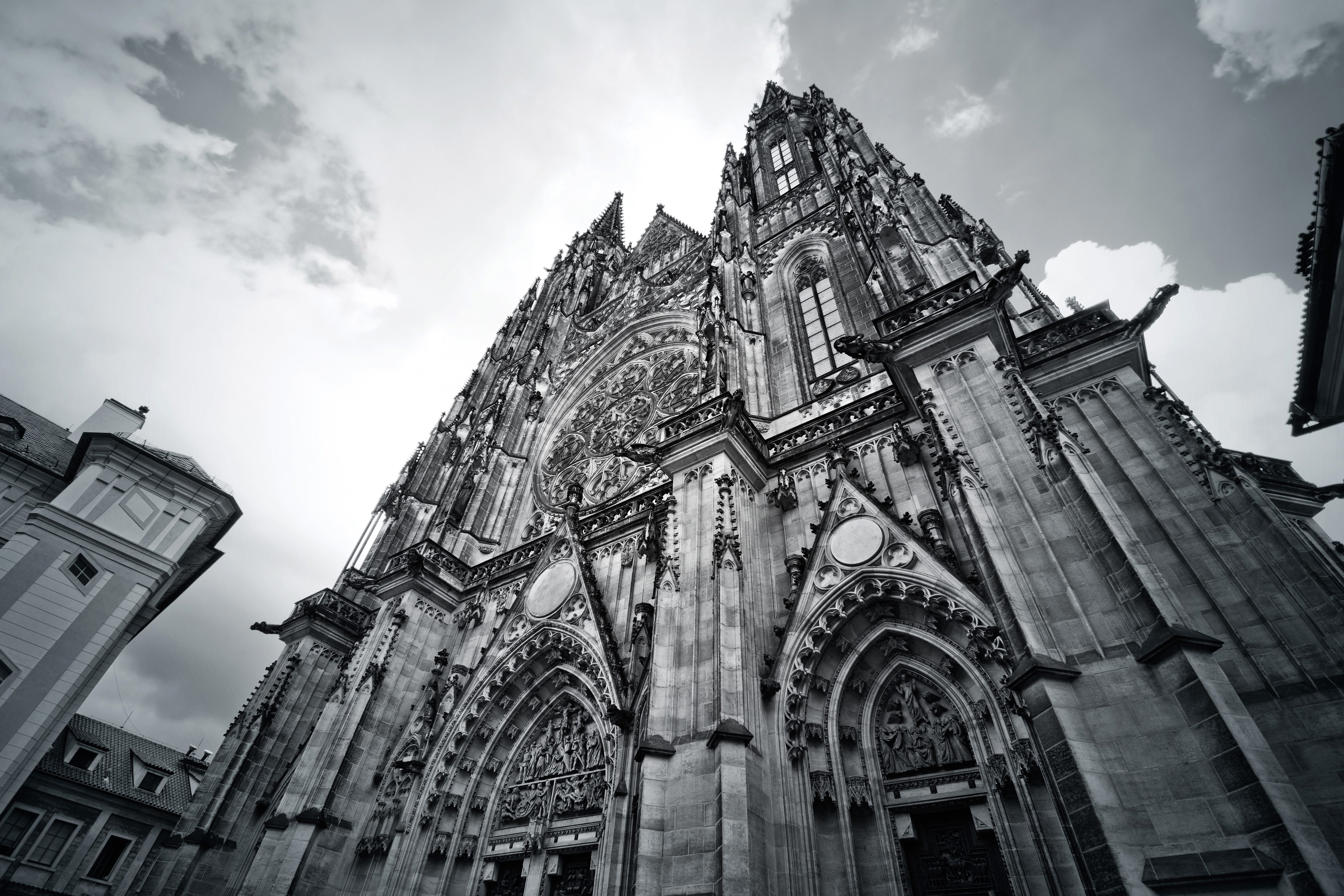
Emerging in northern France in the mid-12th century, Gothic art represented a seismic shift in the European aesthetic. Moving away from the thick walls and dark, heavy interiors of the Romanesque period, the Gothic era was defined by a single, revolutionary concept: Lux Nova, or "new light." This movement sought to dissolve the barrier between the earthly and the divine by creating soaring architectural spaces that felt as if they were made of light and glass rather than stone. It was a period of incredible technical innovation, where the mastery of engineering allowed for heights never before seen in Western architecture.
The core of this transformation relied on a sophisticated application of Color Theory. Gothic artists and builders understood that light was not just a utility but a medium in itself. By passing sunlight through vibrant stained glass, they transformed plain interiors into kaleidoscopic spaces of worship. The use of pure, saturated primary colors—deep cobalts, brilliant rubies, and golden yellows—became the hallmark of the era, illustrating complex biblical narratives while immersing the viewer in a literal "spectrum" of spiritual awe.
According to Britannica, the movement began with Abbot Suger’s reconstruction of the Basilica of Saint-Denis, where he envisioned the cathedral as a physical representation of the Heavenly Jerusalem.
The Pillars of Gothic Architecture
Gothic art is inseparable from its architecture. To achieve the "skeleton of light," builders developed three key structural innovations:
1. The Pointed Arch
Unlike the rounded arches of Romanesque buildings, the pointed arch allowed for much greater height. It distributed weight more efficiently, directing force downward rather than outward. This enabled cathedrals to reach toward the heavens, creating a sense of verticality that defined the entire movement.
2. The Rib Vault
The rib vault was a structural web of stone that supported the ceiling while allowing the walls between the ribs to be made thinner. This reduced the overall weight of the building and created a sense of rhythmic, upward movement throughout the nave.
Art Historian Tip: Gothic cathedrals were originally intended to be even more colorful! The stone statues and columns were often painted in bright hues (polychromy). Over time, this paint wore away, leaving us with the "bare stone" look we see today, but the original experience was a total immersion in color!
3. The Flying Buttress
This is perhaps the most famous Gothic innovation. By placing external stone supports away from the main walls, builders could transfer the outward thrust of the massive roof directly to the ground. This meant that the walls no longer had to support the weight of the building, allowing them to be replaced by massive, luminous windows.
Stained Glass: Painting with the Sun
In the Gothic period, stained glass was the primary form of painting. These "walls of light" served a dual purpose: they provided theological instruction to a largely illiterate public and created an atmosphere of divine presence. The famous "Suger’s Blue," a deep cobalt blue used in the windows of Saint-Denis and Chartres, became synonymous with the era's spiritual depth.
The manufacturing of this glass was a masterwork of medieval chemistry. Artisans added metallic oxides to molten glass—cobalt for blue, copper for red and green, and silver for yellow—to achieve permanent, vibrant colors. As noted by the Metropolitan Museum of Art, the interplay of these colors was carefully calculated to produce a specific "vibration" of light that would intensify as the sun moved across the sky.
Naturalism in Sculpture and Illumination
While Byzantine art focused on abstraction, Gothic art saw a return to naturalism. Sculptures on cathedral portals began to pull away from the stone walls, becoming more three-dimensional and emotionally expressive. Figures like those at Reims Cathedral show a "Classical" influence, with individualized faces and realistic drapery.
This naturalism extended to illuminated manuscripts. Books like the Très Riches Heures du Duc de Berry showcased a growing interest in landscape, seasonal change, and the details of daily life. This shift toward observing the natural world laid the groundwork for the humanism that would later define the Renaissance. According to Smarthistory, Gothic art represents the moment when human emotion and physical reality began to be re-integrated into sacred depictions.
Before the Light: The Golden Legacy of Byzantine Art
Before Gothic builders reached for the sky, the Byzantine Empire mastered the use of gold and mosaic to reflect the divine. Explore how these shimmering traditions differ from the Gothic focus on light.
Gothic art remains one of the most awe-inspiring achievements of the Western world. By combining bold engineering with a spiritual obsession with light and color, medieval artisans created spaces that continue to humble and inspire us today. It is a reminder that art has the power to transform raw materials into something transcendental, using the principles of harmony and balance to lift the human spirit toward the infinite. Whether through the point of an arch or the glow of a rose window, Gothic art speaks of a time when the world was seen as a brilliant, light-filled reflection of the divine.