
- Share
- Tweet
- Pin
- You are here:
- Home »
- Blog »
- Art History »
- Byzantine Art History
Byzantine Art: Capturing the Golden Light of the Divine
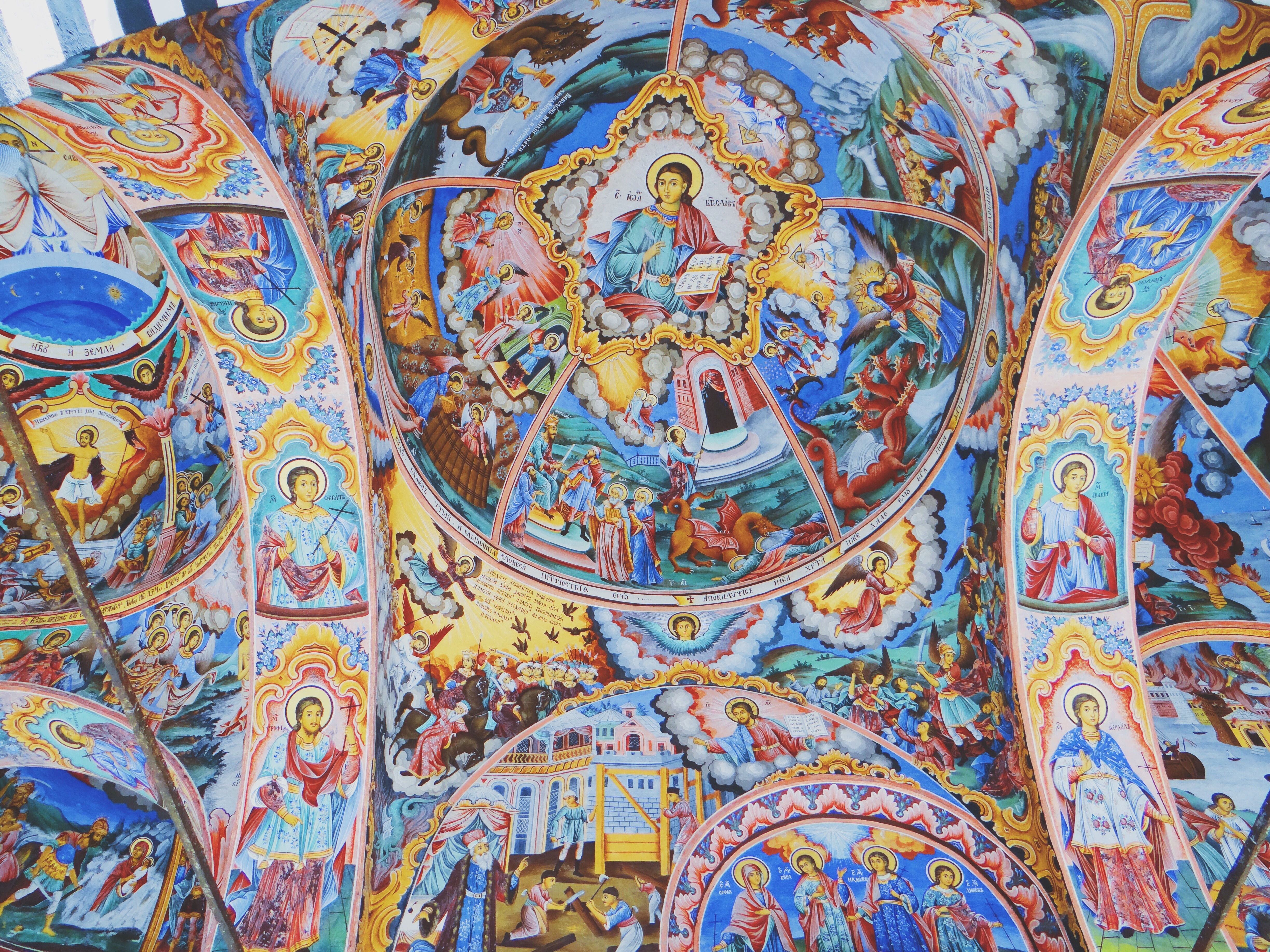
Spanning over a millennium, from the dedication of Constantinople in 330 AD to its fall in 1453, Byzantine art stands as one of the most cohesive and spiritually charged movements in human history. While the Western Roman Empire collapsed and transitioned into the Middle Ages, the Eastern Empire flourished, creating an artistic language that prioritized the spiritual over the physical. Byzantine artists were not interested in the naturalistic realism of their Greek and Roman predecessors; instead, they sought to create a window into the heavenly realm using abstraction, symmetry, and an unparalleled use of light.
The foundation of this aesthetic lies in a deeply sophisticated understanding of Color Theory. By utilizing gold leaf and glass tesserae (small tiles) set at varying angles, Byzantine masters were able to manipulate light itself, making figures appear as if they were radiating a divine glow. In this sacred art form, color was not merely a decorative choice but a theological statement. From the deep imperial purple reserved for Christ and the Emperors to the brilliant cerulean blue of the Virgin Mary’s robes, every hue served to elevate the viewer’s mind from the earthly to the eternal.
According to Britannica, the movement was fundamentally conservative, maintaining strict traditions and iconographic types that ensured religious messages remained consistent across the vast empire.
Key Characteristics of Byzantine Art
Byzantine art is characterized by several distinct features that set it apart from both the classical past and the later European Renaissance:
1. The Use of Gold and Mosaics
The most iconic element of Byzantine art is the golden background. By replacing naturalistic landscapes with flat, shimmering gold, artists removed their subjects from time and space, placing them in an eternal "now." Mosaics, made of glass and stone, became the primary medium for church decoration. The irregular surface of the mosaics caused light to dance across the images, creating a dynamic experience for the worshiper below.
2. Lack of Perspective and Naturalism
Byzantine art purposely avoided the use of linear perspective. Figures were often depicted as flat and elongated, with large, expressive eyes that gazed directly at the viewer. This frontality was designed to encourage a direct spiritual connection between the devotee and the saint represented. The lack of shadows and depth reinforced the idea that these figures existed in a world beyond the physical laws of light and gravity.
Artist Tip: The "Byzantine Gold" was often created by sandwiching a thin layer of gold leaf between two pieces of glass. This protected the metal and allowed the tiles to reflect light with incredible intensity, a technique that modern designers still study for its luminous effects!
3. Sacred Icons and the Iconoclasm
Icons—portable paintings of sacred figures on wooden panels—were central to Byzantine life. They were considered "windows to heaven" and were used for both public worship and private devotion. However, the use of these images led to the "Iconoclastic Controversy" in the 8th and 9th centuries, a period where religious images were banned and destroyed out of fear they had become objects of idolatry. The eventual restoration of icons solidified their importance in the Orthodox tradition.
Byzantine Architecture: The Dome of Heaven
Architecture in the Byzantine Empire was designed to support and showcase the art. The most significant achievement was the development of the "pendantive"—a structural solution that allowed a circular dome to be placed over a square room. This reached its zenith in the Hagia Sophia in Constantinople.
The interior of a Byzantine church was meant to represent the cosmos. The dome symbolized the heavens, often featuring a mosaic of Christ Pantocrator (Ruler of All) looking down, while the lower walls depicted saints and biblical scenes, representing the earthly church. As noted by Smarthistory, the architecture and the art were inseparable, working together to create an immersive liturgical experience.
Color Symbolism in the Byzantine Palette
Colors in Byzantine art were never chosen by accident. They followed a strict symbolic hierarchy:
- Gold: The uncreated light of God and the glory of the heavenly kingdom.
- Purple: Sovereignty and imperial power, used for the robes of Christ and the Virgin Mary to denote their royal lineage.
- Blue: Human nature or the mysteries of the divine life.
- White: Purity, holiness, and the Transfiguration of Christ.
The Sacred Colors of the Nile: Ancient Egyptian Art History
Before the gold of Byzantium, the Pharaohs mastered their own symbolic palette. Discover how Ancient Egyptian art used color to ensure immortality.
The legacy of Byzantine art is profound, influencing the Italian Proto-Renaissance, the art of the Ottoman Empire, and the continued traditions of the Eastern Orthodox Church today. It serves as a reminder that art can transcend the boundaries of the physical world, using light and color to express the deepest truths of the human soul. By setting aside the pursuit of anatomical perfection, Byzantine artists achieved something equally powerful: a timeless, golden vision of the sacred that continues to inspire awe and reverence centuries after the empire's end.