
- Share
- Tweet
- Pin
- You are here:
- Home »
- Blog »
- Art History »
- Ancient Egyptian Art History
Ancient Egyptian Art: Building a Bridge to the Afterlife
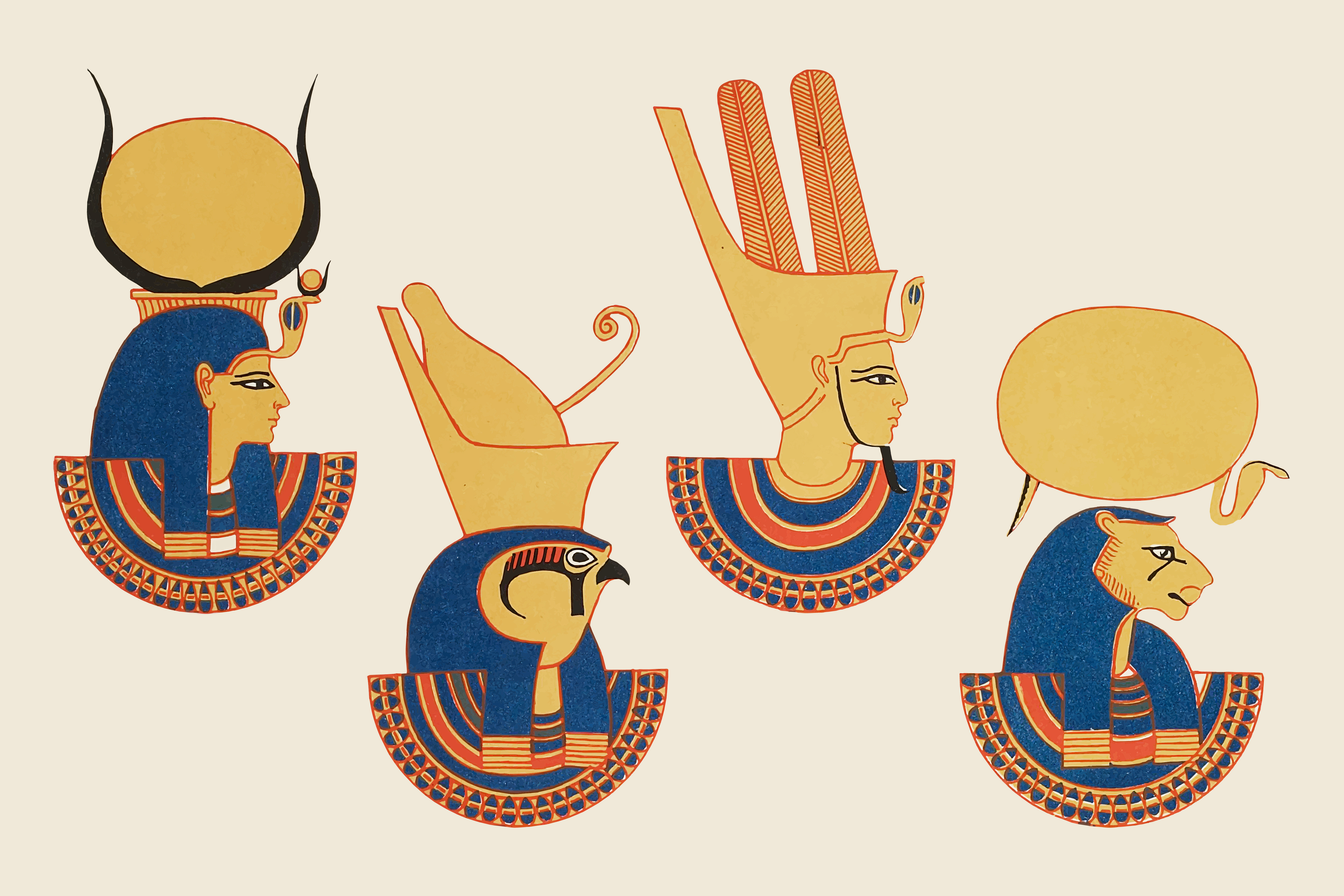
Few civilizations in human history have left a visual legacy as instantly recognizable as that of the Nile Valley. Stretching across three millennia, ancient egyptian art was defined by a remarkable consistency, a deep-seated reverence for order, and a focus on the eternal rather than the ephemeral. For the Egyptians, art was not merely decorative; it was a functional, magical tool designed to maintain "Ma'at"—the universal balance—and to ensure that the soul could navigate the journey into the afterlife successfully.
The mastery of visual organization seen in these ancient works is a precursor to what we now study as Color Theory. Every pigment used by Egyptian artisans carried a specific symbolic weight, and every figure was drawn according to a strict mathematical grid. This system ensured that the images remained clear and potent, acting as a permanent record of the divine order. Whether carved into the walls of massive temples or painted on fragile papyrus, ancient egyptian art sought to capture the essence of its subjects for all eternity.
According to the Metropolitan Museum of Art, the stability of Egyptian artistic styles over thousands of years is a testament to the culture's unique worldview, where innovation was often less valued than the preservation of sacred tradition.
The Canon of Proportions and Form
One of the most striking features of ancient egyptian art is the "composite view" of the human figure. In this style, the head is shown in profile, while the eye is shown as if from the front. The shoulders are squared toward the viewer, but the hips and feet return to a profile view. This was not due to a lack of skill; rather, it was an attempt to show each part of the body from its most recognizable angle.
To maintain this consistency across centuries, artists used a grid system known as the "Canon of Proportions." A standard human figure was always 18 units high from the soles of the feet to the hairline. This mathematical precision allowed multiple artists to work on a single monumental project while maintaining a unified style. In ancient egyptian art, the size of a figure also indicated its importance—a concept known as "hierarchical scale." A Pharaoh would be depicted as much larger than his servants, symbolizing his divine status and power.
Art History Fact: Egyptian artists were often anonymous. In their culture, the successful execution of the sacred traditional style was considered a higher achievement than personal creative expression. The artist was seen as a vital craftsman maintaining the cosmos!
Symbolism in Ancient Egyptian Color
The Egyptian palette was limited to six primary colors, each derived from natural minerals and carrying profound religious meaning. Unlike modern artists who might choose colors for aesthetic appeal, practitioners of ancient egyptian art chose pigments for their spiritual "charge":
- Green (Wadj): Represented growth, vegetation, and the fertility of the Nile. It was the color of Osiris, the god of the afterlife and resurrection.
- Red (Desher): Symbolized fire, blood, and the sun, but it also carried a dual meaning of chaos and destruction, associated with the god Set.
- Blue (Irtyu): Represented the sky and the primordial waters of the Nile. Lapis lazuli was a prized semi-precious stone that inspired the use of this pigment in depictions of the divine.
- Yellow (Khenet): The color of the sun and gold. Since gold was believed to be the "flesh of the gods," yellow was used to denote immortality.
Architecture and Monumental Sculpture
Architecture is perhaps the most enduring medium of ancient egyptian art. The Pyramids of Giza, the temples of Luxor and Karnak, and the rock-cut tombs of the Valley of the Kings were all designed with a sense of "monumentality." These structures were intended to be permanent, built of stone to defy the passage of time and the harsh desert environment.
Sculpture played an equally vital role. Statues were often placed in tombs to serve as a "Ka-statue"—a physical vessel for the soul if the mummified body should fail. These statues were carved with a sense of idealized youth and strength, designed to represent the deceased at their peak for all eternity. As noted by the British Museum, the rigid, forward-facing poses of these statues reflected a sense of timelessness and poise appropriate for a divine being.
The Amarna Period: A Brief Artistic Revolution
While ancient egyptian art is known for its stability, there was one notable period of radical change. During the reign of Akhenaten (the Amarna Period), the traditional canon was discarded in favor of a more naturalistic, even distorted, style. Figures were depicted with elongated necks, thin limbs, and prominent bellies. This brief departure highlighted the intimacy of the royal family and a new focus on the sun disk, the Aten. However, shortly after Akhenaten’s death, his successor Tutankhamun oversaw a return to the traditional styles that had defined the culture for centuries.
The Evolution of the Palette: From Ochre to Primary Colors
Intrigued by the symbolic colors of the Pharaohs? Learn how the ancient Egyptian palette laid the groundwork for the modern primary colors we use in art today.
The legacy of ancient egyptian art continues to inspire artists and designers today. Its emphasis on balance, its masterful use of color symbolism, and its monumental scale have influenced everything from Greek sculpture to Art Deco architecture. By looking at these ancient works, we are reminded of the power of art to transcend time, speaking a universal language of divinity and human aspiration that remains as clear today as it was five thousand years ago.